
Indonesian Native Greens & Roots
Indonesia possesses a rich botanical tradition featuring numerous native and naturalized plants used in regional cuisine. Many of these traditional greens and roots carry established nutrient profiles and historical dietary significance.
Traditional Indonesian Plant Foods
Indonesian cuisine integrates diverse plant foods that have been used for centuries and continue to feature in contemporary dietary patterns. These plants combine cultural significance with documented nutritional composition:
- Adaptation to tropical climate and soil conditions
- Integration into traditional food preparation methods
- Established presence in daily dietary patterns across regions
- Known nutrient profiles documented in nutritional science
- Economic accessibility for diverse populations
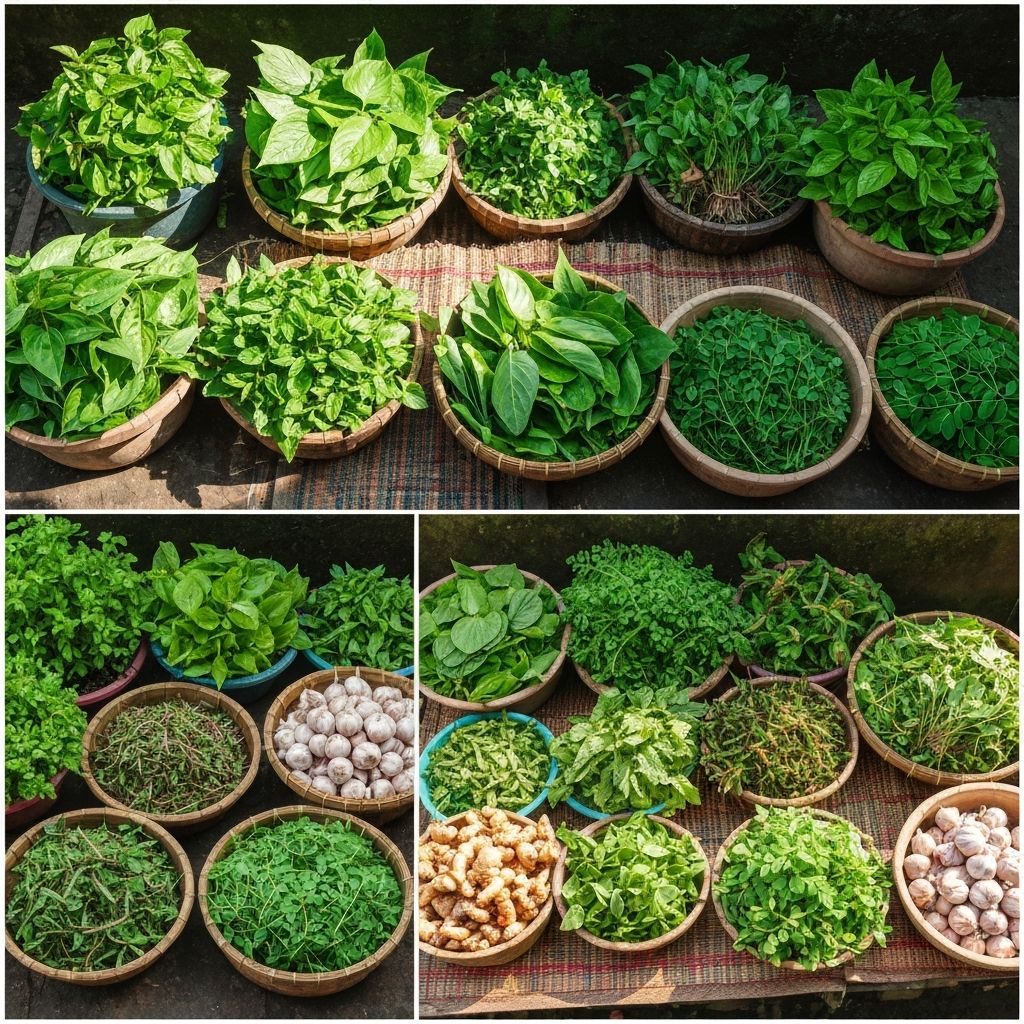
Key Native Greens and Their Profiles
| Plant Name (Indonesian) | Botanical Name | Known Nutrients | Traditional Use |
|---|---|---|---|
| Katuk (Sauropus androgynus) | Sauropus androgynus | Protein, iron, calcium, vitamins A and C | Leafy vegetable in soups and stir-fries |
| Talinum / Ginseng Jawa | Talinum triangulare | Vitamins, minerals, fiber | Vegetable in various preparations |
| Pegagan (Asiatic Pennywort) | Centella asiatica | Triterpenes, flavonoids, minerals | Traditional beverage and fresh preparation |
| Moringa (Kelor) | Moringa oleifera | High protein, calcium, iron, vitamins | Leaves in soups; seeds in various preparations |
| Bayam Duri | Amaranthus spinosus | Iron, calcium, vitamins A and C | Leafy green in everyday cooking |
| Kangkung | Ipomoea aquatica | Iron, calcium, vitamins | Staple vegetable in regional cuisines |
Traditional Root Vegetables
Indonesian cuisine employs numerous root vegetables that serve both nutritional and flavor-enhancing roles:
- Ginger (Jahe): Rhizome with warming properties; used in beverages, curries, medicinal preparations
- Galangal (Lengkuas): Aromatic rhizome; central to regional curry pastes and soups
- Turmeric (Kunyit): Rhizome with documented bioactive compounds; staple in Indonesian cooking
- Cassava Root (Singkong): Staple carbohydrate; prepared boiled, fried, or processed into flour
- Sweet Potato (Ubi Jalar): Nutritious root vegetable; staple in many regions
- Taro (Talas): Root vegetable with cultural significance; prepared in numerous ways
Integration into Contemporary Diets
These traditional plants remain integral to Indonesian dietary patterns for multiple reasons:
- Economic accessibility throughout diverse socioeconomic groups
- Cultural continuity and preference patterns across generations
- Adaptation to regional growing conditions and agricultural practices
- Culinary flexibility—integrated into multiple dish types
- Nutritional adequacy when combined with diverse other foods
- Environmental sustainability and local food systems support
Historical and Contemporary Research
Indonesian ethnobotany and nutrition research has documented these plants' roles:
- Traditional knowledge systems recognized nutrient-rich status of these plants
- Scientific analysis confirms nutrient profiles supporting traditional use patterns
- Phytochemical research identifies bioactive compounds in many species
- Bioavailability studies examine how nutrients are accessed from these foods
- Contemporary research continues investigating traditional preparation methods and their nutritional optimization
Culinary Integration Examples
These plants integrate into Indonesian cuisine through established preparation methods:
- Sambals: Pastes incorporating fresh greens, garlic, chili, and traditional roots
- Soups: Broths built with vegetables like kangkung and aromatic roots
- Curries: Complex spice pastes featuring turmeric, galangal, ginger
- Stir-fries: Quick cooking of leafy greens with aromatic additions
- Beverages: Traditional drinks incorporating pegagan, ginger, and other roots
Limitations and Context
About This Information
This page provides educational information about Indonesian native greens and roots. It:
- Describes traditional food sources and their documented nutrient profiles
- Does not constitute medical advice or claim therapeutic properties
- Does not suggest health outcomes from consuming these plants
- Recognizes that traditional knowledge and scientific validation coexist and continue to evolve
- Does not replace professional consultation for health-related concerns
Traditional foods represent cultural heritage and nutritional resources. For specific health concerns or dietary planning, consult with appropriate professionals.